Series IIA 88-inch utilities (1961-1971)
The Series IIA models were introduced in 1961 and were strictly evolutions of the Series II types. They took their name from a change in the Land Rover chassis numbering system. Instead of a new prefix code for every model-year, there was now a suffix letter which changed whenever important specification changes were made. The first vehicles with this new system had an A suffix, and so became Series IIA models. As the code letters changed, however (finishing at H in 1971), the model-type illogically remained unchanged as Series IIA! There were two major phases of Series IIA production. Early models had their headlights in the grille, but with the Suffix G models in April 1969 came a switch to wing-mounted headlights. Briefly overlapping the end of the "headlights in grille" period came a transitional specification for the North American market, which is explained below. The 88-inch Series IIA models were available with either the 2.25-litre petrol engine first seen in the Series II types, or with a new diesel engine, enlarged to 2.25 litres from the 2-litre Series II type. The final examples (Suffix H from February 1971) had an all-synchromesh gearbox. Most IIAs came in Bronze Green, but there were six other colours: Beige, Dark Grey, Light Green, Light Grey, Marine Blue and Poppy Red, the latter for fire engines. Seats were grey until October 1968, when they switched to black. There were 151,820 88-inch Series IIA models (including all Station Wagons). Diesel engines were fitted to just 28,109 (about 18.5 percent) of that total.
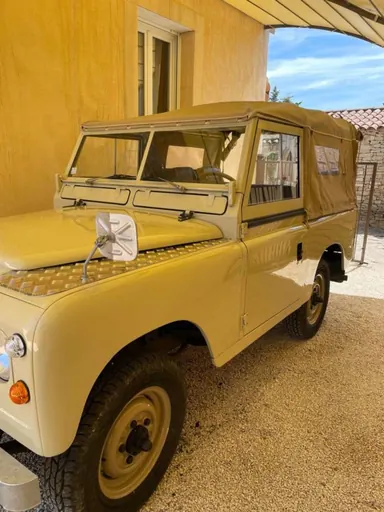
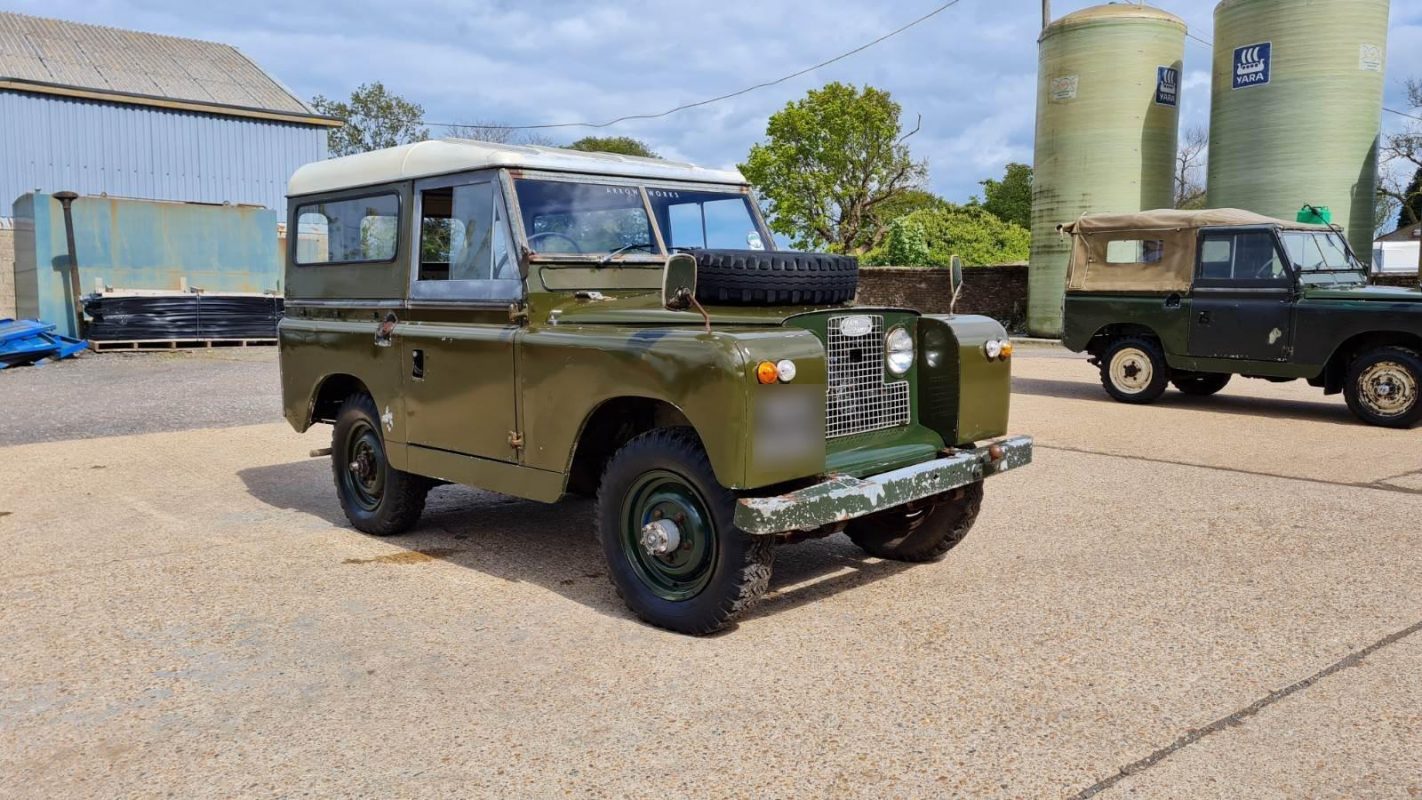
This particular example features many distinctive characteristics, such as the Smiths electric variable speed heater, original door cards with side pockets open (only available on the deluxe edition), cat flap rear door with extensible stanchions coma Hardura transmission tunnel, "razor edge" Deluxe bonnet with bonnet mounted spare wheel, OverDrive, which was a special order item, rear bench seats, side windows, Jaeger instruments, spring loaded steering wheel, central passenger seat, choke warning light on the dashboard, rear lift handles, wing top mirrors, and completely original paint other than the front valace and guard. The chassis is in excellent structural condition, and the rear cross member has been professionally replaced some years ago.
The vehicle comes with a full revision of the fuel system, the breaking system and the electrical system and will be ready for regular use.
The vehicle is accompanied by an extensive file of documentation including MOT certificates and various invoices as well as the original green registration document.
We can offer a nationwide, Europe-wide and international delivery service.
More about
This text was generated using natural language processing technology and may contain inaccuracies.
The 1965 Land Rover Series 2a represents a pivotal chapter in off-road history, marking the transition from the original Series I to the refined II generation. Introduced in 1961, these models were distinguished by a new chassis numbering suffix system, with early examples bearing the 'A' designation. This specific 88-inch utility features the robust 2.25-litre petrol engine and manual transmission that defined the era, offering a balance of durability and performance suitable for both rugged terrain and daily driving.
This particular example is presented in Concours condition, boasting a completely original white paint finish with only minor wear to the front valance and guard. The vehicle retains numerous factory-correct features indicative of its high specification, including the distinctive 'razor edge' Deluxe bonnet, wing-mounted mirrors, Jaeger instruments, and a spring-loaded steering wheel. Notably, it is equipped with OverDrive—a special order item—and features original door cards with side pockets, a detail exclusive to the deluxe edition. The interior includes rear bench seats and a central passenger seat, while the chassis remains in excellent structural condition following a professional replacement of the rear cross member.
Mechanically prepared for regular use, the Land Rover has undergone a comprehensive revision of its fuel, braking, and electrical systems. Documentation is extensive, including MOT certificates, invoices, and the original green registration document. With over 150,000 Series IIAs produced globally, this white example stands as a pristine representation of one of the most iconic utility vehicles ever built.

 United Kingdom